
Proven Product Advantages
Thin & Ultra-Thin Wafers: Available in thicknesses from 150 μm down to 50 μm
-
Exceptional uniformity for ultra- thin wafers for space and aerospace applications
-
Tunable surface morphology for superior flatness/topology
Low Oxygen Content:
-
Enhances thermal stability during processing
-
Reduces efficiency loss in emitter formation
-
Eliminates the root cause of light-induced degradation (LID)
Precision Process Control:
-
Enables engineered dopant profiles for optimized junctions
-
Consistent wafer-to-wafer resistivity for high process repeatability
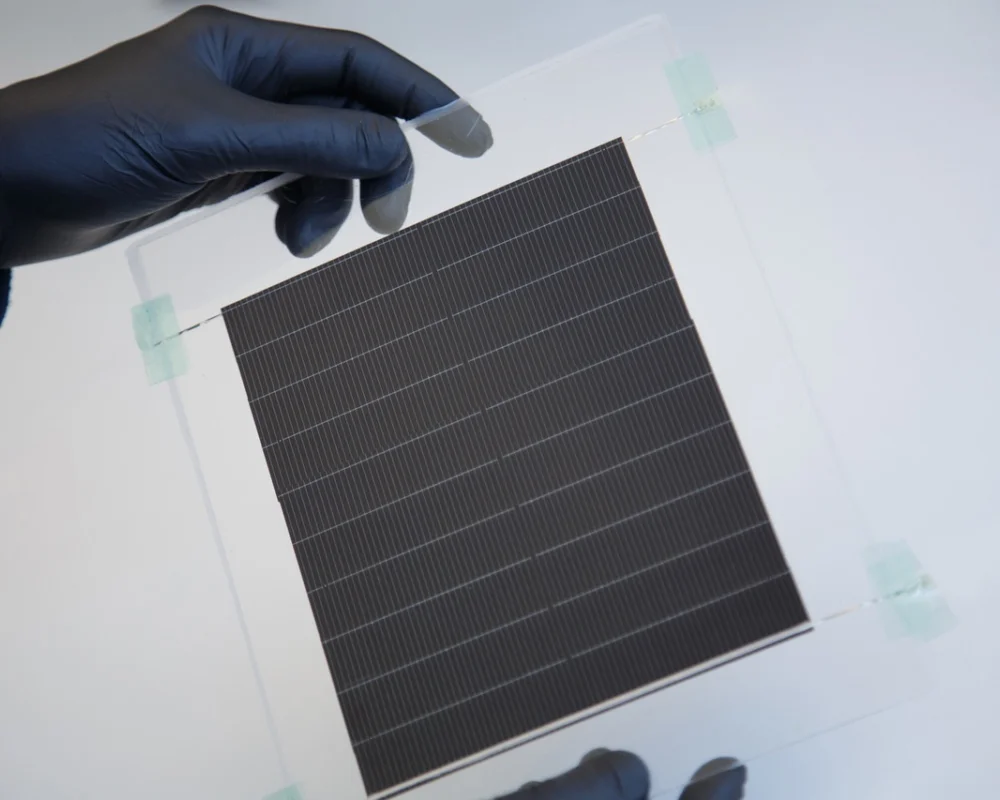
Advanced n-type HJT Solar Cell with 24.4% efficiency
Lower Carbon Footprint & Resource Use
-
Uses 50% less energy by eliminating energy-intensive Siemens & CZ
-
Wire saw eliminated. Higher material yield as there is no kerf loss
-
Reduces waste through recycling of seed wafers and exhaust gases
-
Eliminates the need for a saw damage etch in the cell processing
-
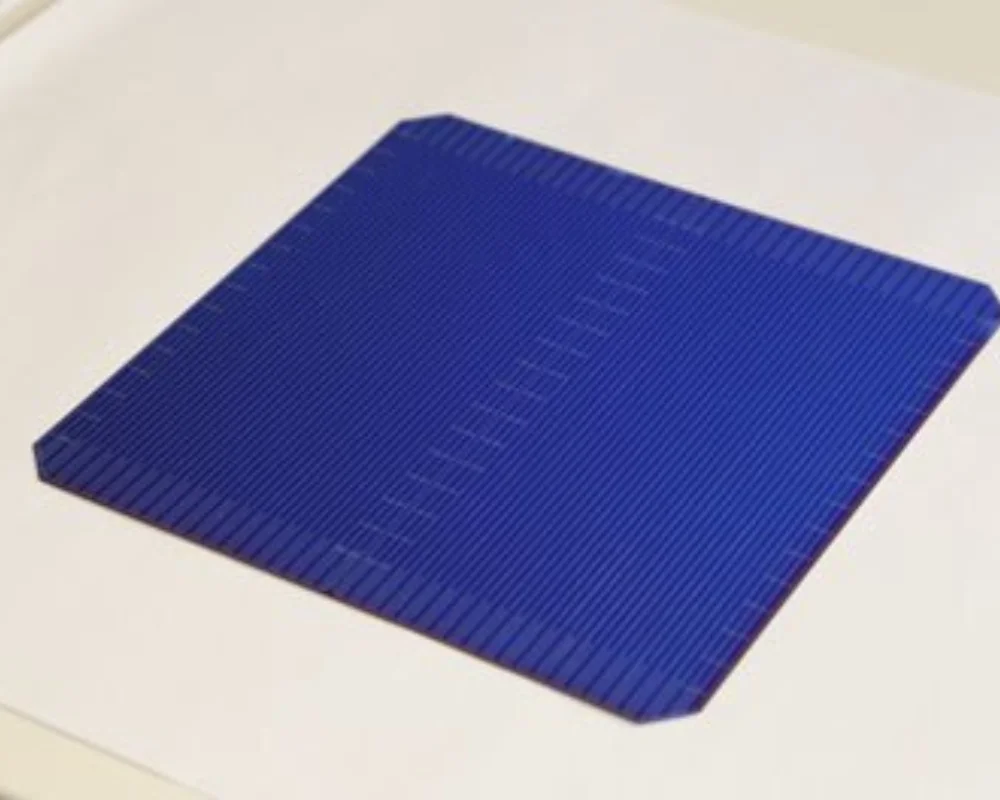
Epitaxially grown wafers served as a drop-in replacement in a leading HJT cell production line, requiring no process optimization.
Enabling A Domestic Supply Chain
Western Equipment
-
Digital Solar Industries uses western manufacturing equipment
Commodity Feedstock
-
Uses Trichlorosilane (TCS) or Silicon Tetrachloride (STC)
-
Commodity pricing of these feedstocks are stable
Locally Sourced Materials
-
No critical material imports required
-
Enables 100% domestic content compliance. No imports


Ultra-thin wafers
As wafers become thinner—down to 50μm and below—they are inherently flexible. This reduces brittleness and cracking risk. This characteristic enables improved handling and opens opportunities for next-generation module solutions for PV applications in space, aerospace and vehicle integration.

Extending Solar Cell Efficiency with Next-Generation Tandem Junctions
Over the next decade, Digital Solar Industries wafer technology is expected to help advance tandem junction solar devicestoward efficiencies of up to 30%. Tandem junction devices benefit from the enhanced resistivity control, material quality, and manufacturing repeatability enabled by the Digital Solar Industries process. These improvements support higher performance, greater reliability, and more scalable production for the next generation of high-efficiency solar cells.